
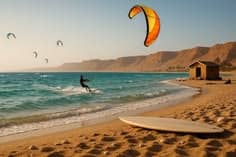
TL;DR: Safaga is one of the world's premier destinations for kitesurfing, offering incredibly steady thermal winds, vast flat-water lagoons, and a much more relaxed atmosphere than its busier neighbors. The peak season runs from April to October, providing consistent conditions for both beginners and advanced riders who want to combine world-class sport with a visit to nearby Luxor.
What is Safaga Kitesurfing?
Safaga kitesurfing is a niche yet world-renowned water sports experience located on the Red Sea coast of Egypt, characterized by its unique combination of high-velocity thermal winds and crystal-clear, shallow lagoons. Unlike the more commercialized hubs of Hurghada or El Gouna, Safaga offers a raw, authentic environment where the wind is compressed between the mountains and the sea, creating a "venturi effect" that ensures reliable conditions for nearly 300 days a year. It is an ideal destination for travelers looking to master the kite or refine their freestyle tricks in a space that feels uncrowded and naturally beautiful.
Why Safaga is a World-Class Kitesurfing Destination
When travelers think of Safaga kitesurfing, their minds often drift to the trendy lagoons of El Gouna. However, for the dedicated rider or the traveler seeking a quieter, more focused environment, Safaga is often the superior choice. The town itself is a traditional port, which means the tourism infrastructure is centered around the sport rather than mass nightlife.
Steady and Reliable Wind
The primary draw for Safaga is the wind quality. Because of the local topography, the wind here is exceptionally clean. It typically blows cross-shore or cross-offshore, which keeps the water surface flat even when the wind is pumping at 25 knots. Modern climate patterns continue to favor this region, with the thermal effect created by the desert heat providing a predictable daily rhythm that kiters can set their watches by.
Uncrowded Waters
One of the greatest luxuries in modern kitesurfing is space. In Safaga, the launch areas are spacious, and the riding zones are vast. You won't find yourself dodging hundreds of other kites as you might in more famous European spots. This makes it significantly safer for beginners who are still learning to control their wing and for advanced riders who need room to practice high-speed jumps and rotations.